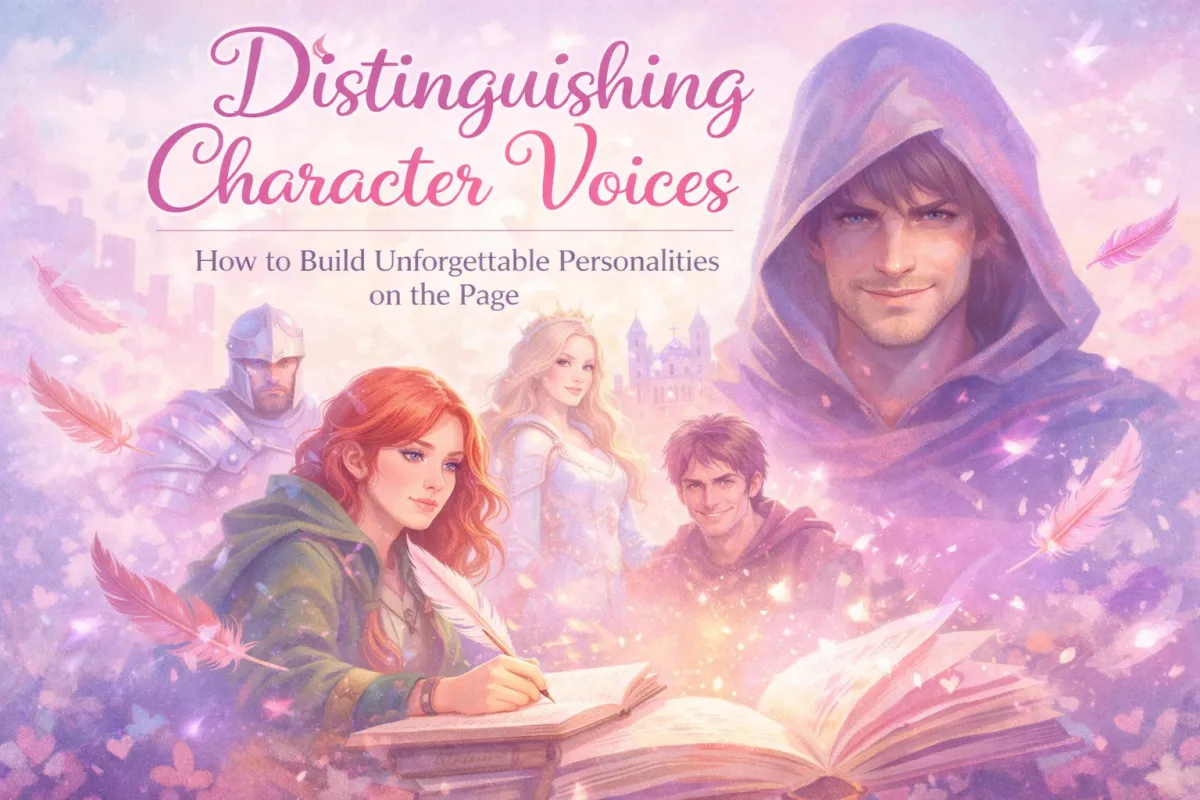
Distinguishing Character Voices: How to Build Unforgettable Personalities on the Page | Rebecca Hamilton
Writing a compelling story isn’t just about plot or pacing, it’s about who is speaking and how they sound while doing it. One of the biggest shifts authors make when moving from hobby writing to a scalable author career is learning how to separate author voice from character voice, something author coach Rebecca Hamilton consistently emphasizes when helping authors build books that actually connect with readers.
If your characters all sound the same, your readers feel it immediately, and that disconnect can quietly impact everything from engagement to long-term sales.
Author Voice vs Character Voice (And Why Most Authors Get This Wrong)
Your author voice is your foundation. It’s the tone, rhythm, and storytelling style that ties your work together.
Your character voice, on the other hand, is layered on top of that foundation, and it should feel completely distinct for every major character.
Think of it like this:
Your author voice builds the stage. Your characters perform on it.
When authors blur this line, characters start sounding like the same person wearing different outfits, and readers lose immersion.
This is also why foundational craft decisions matter just as much as marketing. If you're still building your fundamentals, you’ll want to read How to Find the Right Editor for Your Self-Published Book, because the right editor doesn’t just fix grammar, they protect and refine your voice.
What Actually Creates a Strong Character Voice
Strong character voice is about internal consistency. Every character filters the world differently based on:
Identity Filters That Shape Voice
Where they’re from
What they want
What they fear
How they were raised
How they interpret situations
Their natural communication style (blunt, poetic, sarcastic, guarded)
A hardened war criminal does not think like a hopeful teenager. A soft-spoken introvert doesn’t narrate like a reckless thrill-seeker.
When this alignment is off, readers feel friction, even if they can’t explain why.
And this ties directly into something Rebecca teaches heavily: alignment. If your character voice doesn’t match your story, tone, and audience expectations, it creates the same disconnect that hurts book sales.
The Hardest Part of Character Voice (That No One Talks About)
The real challenge is perspective. To write authentic character voices, you have to step into viewpoints you may not agree with. That’s especially true for villains.
Why Your “Bad Guys” Feel Flat
Most authors unintentionally turn antagonists into caricatures instead of fully realized people. But strong stories require something deeper:
Your villain should feel like the hero of their own story.
That means:
Their logic makes sense (to them)
Their beliefs feel real
Their voice reflects their worldview, not yours
This level of depth is what separates surface-level storytelling from books that readers remember.
Character Voice in Action (A Simple Exercise)
Let’s look at how voice changes perception. Same scene: a horse on a farm.
Positive Mood
“I like him. He has murder in his eyes.”
“Whoa! That horse is huge! Do you think he wants to be my friend?”
“Oh, what a soulful creature! His mane is like the wind’s own poetry!”
“Impressive creature. Muscular, well-trained… I imagine he knows exactly when to kick someone in the chest.”
Each line reveals a completely different personality, without naming the character.
Negative Mood
“Beautiful, but wasted on this place.”
“I don’t think he wants to play with me today.”
“Even the horse looks like it wants to be put out of its misery.”
“Even the horse looks lonely today. His eyes are the color of forgotten dreams.”
Same setting. Same object. Different voice = different emotional experience. That’s the power you’re building.
Why Character Voice Impacts Book Sales (More Than You Think)
Here’s where most authors underestimate the impact. Character voice doesn’t just affect storytelling, it affects reader retention.
If readers don’t emotionally connect with characters, they don’t:
Finish the book
Buy the next one
Stay in your ecosystem
This is exactly what separates authors stuck on the “royalty rollercoaster” from those building long-term income.
If you want to understand how reader retention turns into scalable income, read:
The Disney Effect: Why Some Authors Keep Readers (And Others Lose Them)
Because voice is part of what makes readers come back.
Final Thoughts: Let Characters Hold the Mic
Your job as an author isn’t to control every word your characters say. It’s to:
Build the stage
Set the tone
Then step back
Let your characters speak through their own experiences, beliefs, and emotional filters.
When you do that well, something shifts.
Readers stop feeling like they’re reading a book……and start feeling like they’re inside someone else’s mind.
Want to Turn Strong Writing Into a Scalable Author Career?
If you’re serious about building not just better books, but a profitable author career, start here: How to Become a Successful Author With $0 to Start
Because great writing is only one part of the equation, the real results come when craft and strategy work together.
Want Feedback on Your Characters (Before Readers Decide for You)?
One of the fastest ways to improve your character voice isn’t writing in isolation, it’s getting real feedback from people who understand what works and what doesn’t in today’s market.
That’s exactly why Rebecca Hamilton built her free author community.
Inside, you’ll find:
Authors at different stages of their careers
Real discussions about what’s working (and what’s not)
Opportunities to ask questions and get direct feedback
If you’ve ever wondered “does this character actually sound distinct?” this is where you’ll get honest answers.
