How to Get Your Book on the NYT or USA Today Bestseller List
Getting on a national bestseller list is one of those goals most fiction authors carry around for years without ever getting a clear answer on how it actually works.
The information out there is vague, contradictory, or written by people who have never done it themselves. Authors either dismiss it as something reserved for traditionally published authors with enormous marketing budgets, or they chase the wrong things and wonder why the list never comes regardless of how much they spend.
Author coach Rebecca Hamilton has hit the New York Times, USA Today, and Wall Street Journal bestseller lists multiple times as an author, and has helped over 550 fiction authors get their letters, the term used inside the community for landing on a national list. What she has built is not a hack or a one-time strategy. It is a repeatable system that has worked across genres, career stages, and budget levels.
This post covers how it actually works, what the lists measure, and what fiction authors need to have in place before a bestseller campaign has any realistic chance of succeeding.
What the NYT and USA Today Bestseller Lists Actually Measure
Before anything else, understanding what these lists are measuring matters because most authors are operating on assumptions that are either outdated or flat-out wrong.
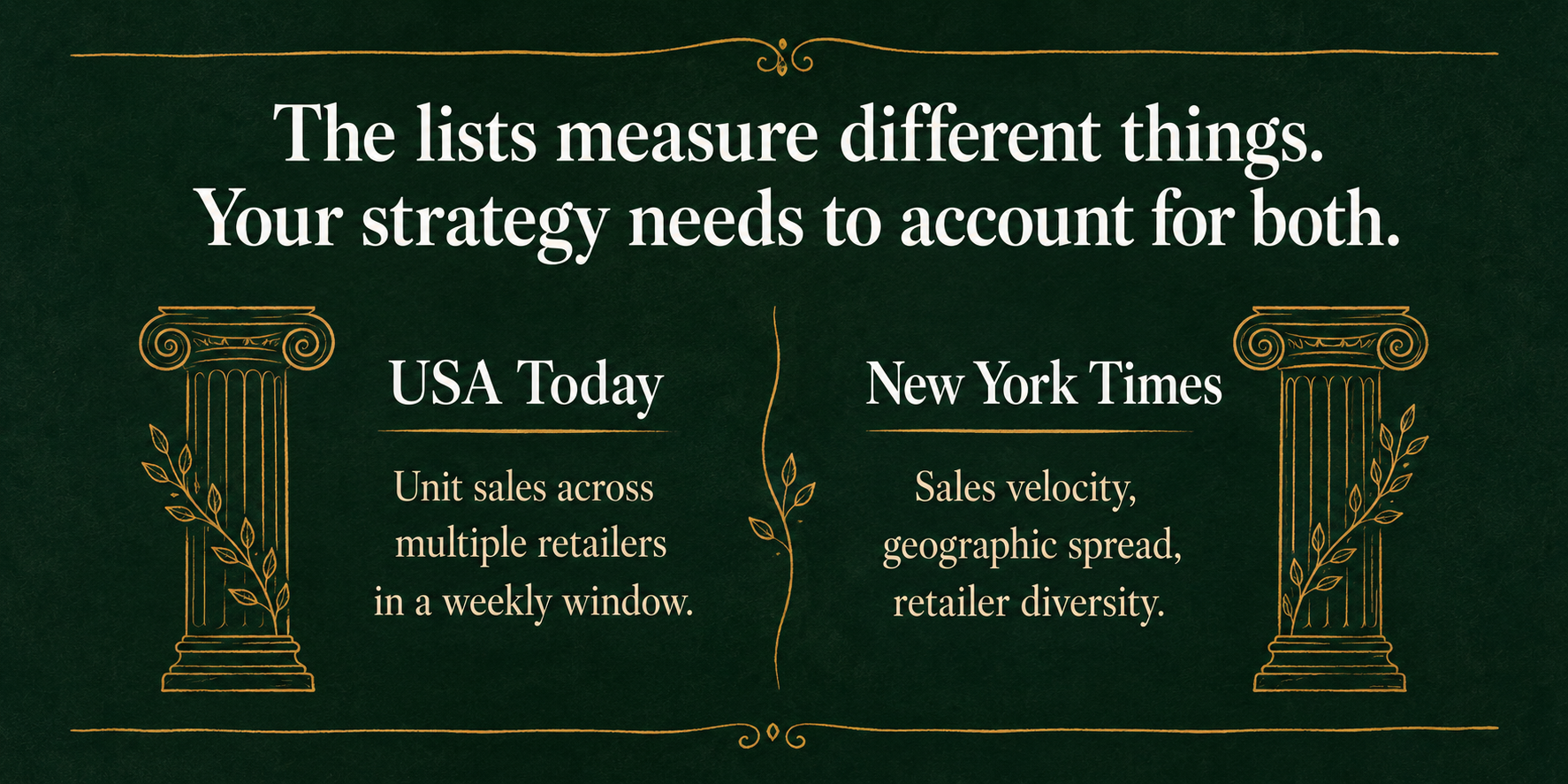
The USA Today bestseller list measures unit sales across a broad range of retailers during a specific weekly tracking period. It is one of the most accessible national lists for indie authors because it counts sales across Amazon, Barnes and Noble, Apple Books, Kobo, and other major platforms rather than restricting eligibility to traditionally published titles.
The New York Times bestseller listis more complex. Different lists track different formats and categories, and the methodology gives weight to sales velocity, geographic distribution of sales, and retailer diversity rather than simply counting total units. This is why authors with strong concentrated sales on a single platform can sometimes fall short even with impressive raw numbers, while authors with more distributed sales hit the list on fewer total units.
Both lists have tracking windows, and what happens inside those windows determines whether a book qualifies. A campaign that generates the right number of sales spread across the wrong time period, or concentrated on the wrong platforms, will not produce a list placement regardless of how many units move overall.
This is foundational to why book launch strategy matters so much in the context of a bestseller campaign. A launch not designed around these mechanics is not actually a bestseller campaign. It is a launch that happens to sell some books.
Why Most Bestseller Campaigns Fail Before They Start
The most common reason bestseller campaigns do not produce list placements is not budget. It is that the product and the infrastructure underneath it are not ready for what a campaign requires.
A bestseller campaign concentrates a significant amount of sales activity into a short window. That concentration is what produces the velocity the lists are looking for. But the same concentration that can push a well-positioned book onto a list will also expose every weakness in a book that is not ready. A blurb that does not convert, a cover that does not match genre expectations, a product page that loses readers before they hit the buy button: all of these problems get amplified under campaign pressure rather than solved by it.
The five marketability questions that Rebecca recommends every fiction author answer before any significant marketing investment apply here more than anywhere else. A book that cannot convert organic traffic consistently will not convert the volume of paid and promotional traffic a bestseller campaign drives toward it.
The author blind spot that keeps most authors from identifying these product-level issues is exactly why so many authors invest in campaigns and come away confused about why the numbers did not add up. The campaign worked as designed. The product page did not hold up its end.
Market research is the other piece that gets skipped. Authors who do not know who their actual reader is cannot build a campaign that reaches enough of the right readers in the right window. Broad promotional placements reaching the wrong audience generate clicks without conversions, and clicks without conversions do not count toward list placement.
The Role of Reviews in a Bestseller Campaign
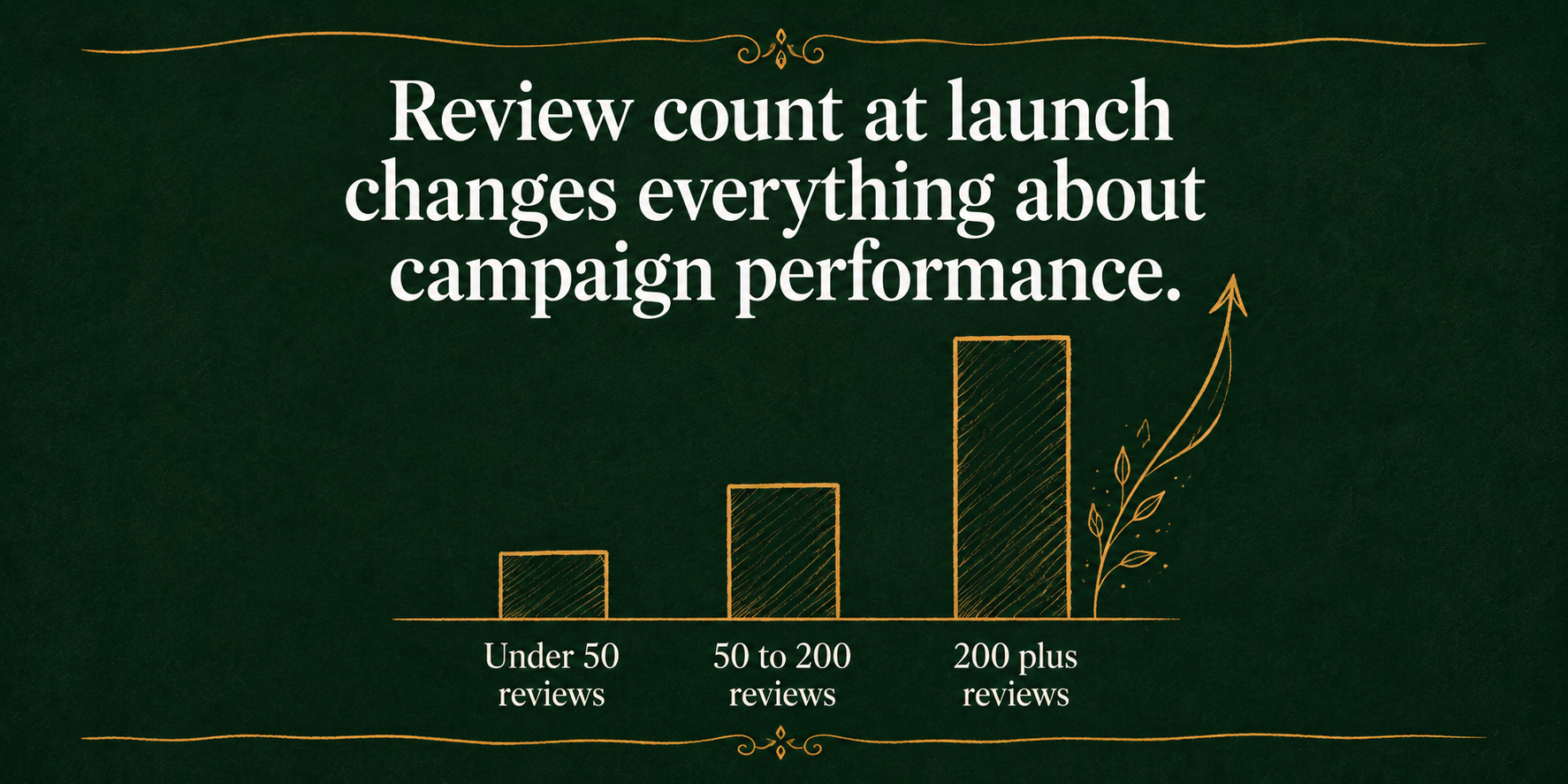
Review velocity matters in two ways inside a bestseller campaign. First, it affects conversion rates on the product page directly. A book launching into a campaign with under 50 reviews converts significantly worse than one launching with 200 or more, and the difference compounds under the traffic volume a campaign generates.
Second, reviews affect Amazon's algorithm behavior during and after the campaign window. The algorithm interprets review velocity as a signal of reader engagement, which influences how aggressively it recommends the book organically during and after the launch period. Authors who hit the lists and sustain strong sales afterward are almost always the ones whose review infrastructure was in place before the campaign started.
This is why the book launch checklist Rebecca's team uses starts the review-building process months before launch day. Getting 100 to 500 reviews at launch is not accidental. It is a structured process that requires a prepared ARC team, a timeline that gives readers enough time to actually finish the book, and a follow-up system that makes leaving a review easy. Many ARC readers also use Goodreadsto track and review books, and Goodreads reviews contribute to the social proof that converts new readers landing on your product page during a campaign.
What most author coaches won't tell you about bestseller campaigns is that the review foundation is often more important than the promotional budget. A book with 400 reviews and a modest promotional investment consistently outperforms one with 30 reviews and a large budget because the conversion rate difference more than compensates for the spend difference.
How Promotional Stacking Works in a Bestseller Campaign
The mechanism behind most successful bestseller campaigns is promotional stacking: layering multiple promotional placements across different platforms during the tracking window so that sales come from multiple sources simultaneously rather than from a single spike on a single day.
The reason stacking matters for list eligibility is that both the NYT and USA Today weight sales across multiple retailers differently than a single-day spike. A coordinated stack that drives sales across Amazon, Apple Books, Kobo, and Barnes and Noble simultaneously produces a distribution pattern more favorable to list eligibility than the same number of sales concentrated on Amazon alone.
This is also why knowing which platforms your genre performs best on matters before building a stacking strategy. An author whose genre underperforms on Apple Books builds a different stack than one whose readers are distributed evenly across platforms. The Facebook ad targeting post covers how to think about platform-specific reader behavior, and how fiction authors should determine their book ad audience is worth reading before any campaign decision is made around targeting.
BookBub featured deals are among the most powerful promotional placements available for indie authors running a bestseller campaign. A BookBub deal timed inside the campaign tracking window can contribute significantly to both the unit count and the retailer diversity the lists are looking for. Getting accepted requires a strong review count, a competitive price point, and a book that meets BookBub's editorial standards, which is another reason the preparation work matters months before the campaign begins.
Promotional stacking also interacts directly with Facebook advertising during the campaign window. Ads running alongside promotional placements create a compounding effect where the organic visibility generated by promotional traffic improves ad conversion rates, and the ad traffic amplifies the organic visibility generated by the promotions. Scaling Facebook ads during a campaign window requires understanding how the bidding environment changes under increased spend, and why most authors think their Facebook ads are brokenwhen they are not is directly relevant to how campaign-period ad data should be interpreted.
The Delayed Buyer Effect is also particularly relevant during a bestseller campaign. Readers who see an ad or promotional placement during the tracking window but purchase a few days later may or may not be counted depending on the exact timing. Understanding this dynamic changes how campaigns are structured and how long promotional activity is maintained around the tracking window.
What Metadata and Algorithm Control Contribute to a Campaign
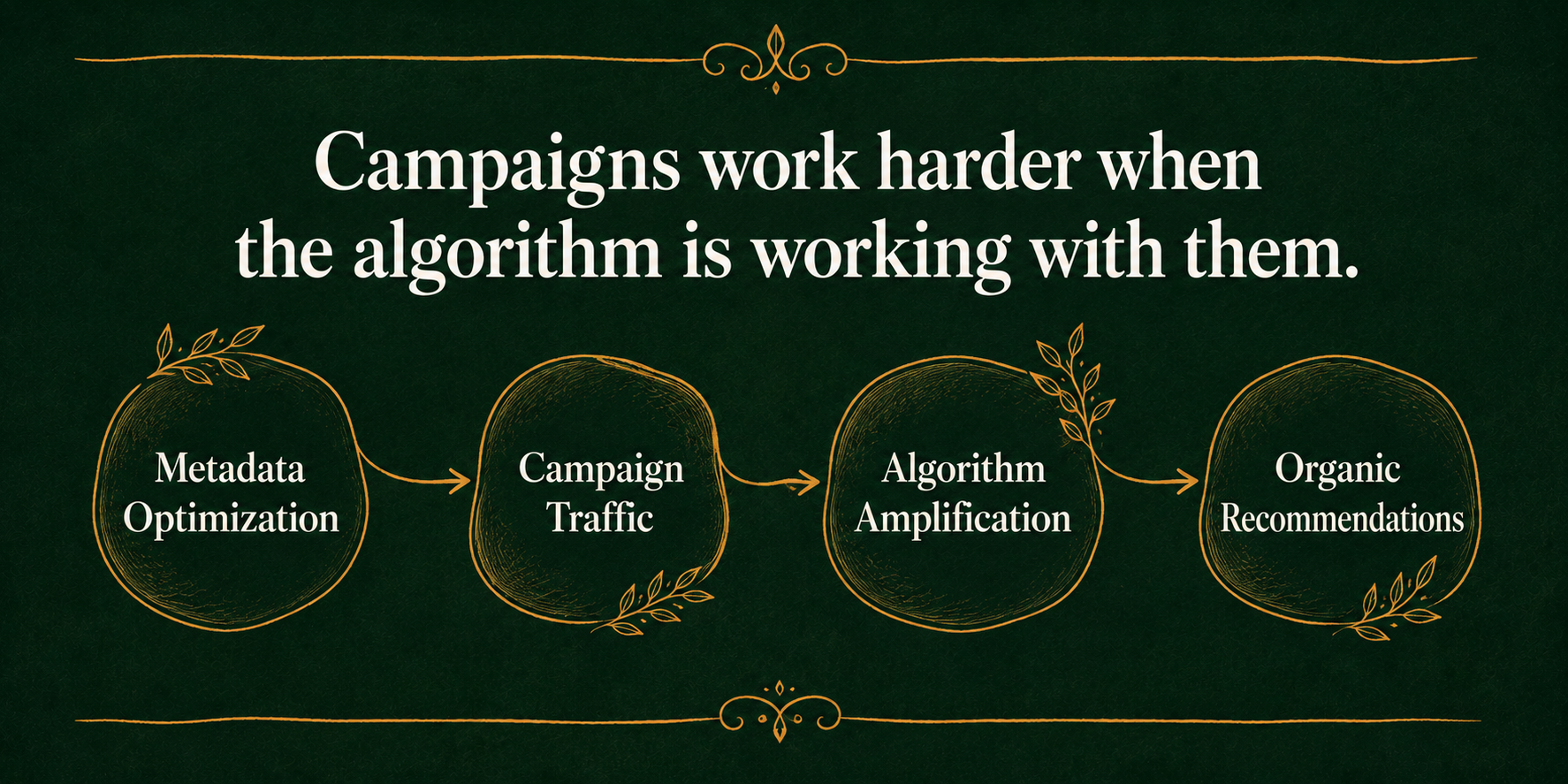
A bestseller campaign does not operate in isolation from the book's metadata and organic algorithm position. Authors who launch campaigns on books with poorly optimized metadata are fighting against the algorithm rather than with it, because the algorithm is not reinforcing the campaign's traffic with organic recommendations.
Advanced metadata optimization, the kind covered inside the 3xP Reader Cloning System, ensures that organic traffic is being driven toward the book during the campaign window rather than away from it. When the algorithm understands who the book is for, campaign-generated sales trigger additional organic recommendations to similar readers, multiplying the impact of every promotional placement.
This is the mechanism behind how book launches trigger Amazon's algorithm the right way and why authors who hit the lists through the program consistently sustain strong sales after the campaign ends rather than seeing an immediate drop. The book launch checklist on the 7FA blog walks through the metadata and setup steps that need to happen before launch day for this to work correctly.
Reader psychology also plays a direct role here. Readers who finish the book and immediately want the next one generate organic algorithm signals that extend the book's visibility window. Authors who hit the list and sustain that momentum afterward are almost always the ones whose books produce high sell-through rates, which is a reader psychology outcome more than a marketing one. How book ad metrics workcovers how sell-through data tells you whether the reading experience is pulling readers through the catalog or losing them after book one
Series vs Standalone: Which Is Easier to Hit the List With
This question comes up constantly inside the program and the answer is more nuanced than most authors expect.
Standalones have an advantage in that all campaign effort is concentrated on a single product with a single conversion point. There is no series read-through required to generate a list-qualifying sale. A reader who buys the standalone counts fully toward the campaign regardless of whether they buy anything else.
Series have an advantage in that a successful campaign on book one drives read-through sales on subsequent books during and after the campaign window, which increases the overall ROI of the investment. Authors who have built a series ecosystem correctly, meaning the books are structured to pull readers through, find that bestseller campaigns on book one generate compounding income from the catalog rather than a single-title return.
Rebecca's recommendation inside the program depends on where the author is in their career and what their catalog looks like. Authors with a strong series that has not yet hit a list are almost always better positioned to campaign on book one than on a new standalone, because the ecosystem underneath the campaign produces a return that justifies the investment more clearly.
This is the same principle behind why publishing more books will not break the royalty ceiling without the right infrastructure in place. A bestseller campaign is not exempt from that rule. The catalog ecosystem either amplifies the campaign's return or limits it. Why you have done everything right and your book sales still don't reflect itexplains why infrastructure problems show up so consistently in campaign results for authors who assumed the campaign itself would carry the weight.
What Happens After the List
Landing on a national bestseller list is meaningful for two reasons: the credibility it provides and the algorithm signals it generates.
The credibility piece is straightforward. A NYT Bestselling Author or USA Today Bestselling Author designation on a cover, in a bio, or in a blurb changes how readers perceive the book before they ever open it. This affects conversion rates on future books, on back catalog titles, and on ads. Authors who have hit the list consistently report that their ad performance improves after the designation appears on their covers, which connects directly to why popular books succeed and what authors can actually learn from them.
The algorithm piece is more subtle. A book that reaches list-level sales velocity during a campaign window signals to Amazon that it has significant reader demand. That signal can persist in the algorithm for weeks or months afterward, generating organic recommendations to readers who never saw the campaign. This is why hitting the list and then doing nothing is still better for long-term royalties than a strong promotional week that does not cross the list threshold.
Authors who want to see exactly how this plays out across different genres and career stages can review the case studies page and the bestsellers page, which include specific examples of authors who hit national lists through the program and the trajectories their careers took afterward.
How to Know If a Bestseller Campaign Is the Right Next Step
A bestseller campaign is a significant investment of time, money, and planning. It is not the right next step for every author at every stage. The product needs to be ready, the infrastructure needs to be in place, and the timing needs to align with where the author's catalog is positioned.
Does Rebecca Hamilton's fiction author coaching work covers the honest answer to who the program is the right fit for. What most author coaches won't tell you addresses the most common ways authors in this position have been getting advice that has not moved them toward a list placement even when they were ready for one. And the 8 costly mistakes self-published authors make covers where campaign budget tends to go wrong before it ever reaches the promotional placement stage.
For authors starting from an earlier career stage who want to understand the full path from zero to a national list placement, your fiction author career starts heregives the full picture of how the system is designed to move authors from wherever they are to wherever they want to go.
The free call with Rebecca's team at Seven Figure Author Career is where the diagnosis happens. The team looks at the current catalog, the product positioning, and the author's goals and identifies specifically whether a bestseller campaign is the right next investment and what would need to be in place before it would have the best chance of succeeding.
Applications are open at sevenfigureauthorcareer.com. For authors who want to get a feel for the community and the approach before applying, the free Six Figure Fiction Facebook group is where Rebecca shares ongoing training on launches, campaigns, and the full system behind consistent list placements.
Rebecca Hamilton is a New York Times, USA Today, and Wall Street Journal bestselling author as well as the ONLY Author Career Coach to help hundreds of authors hit national bestseller lists and make six to seven figures a year writing fiction. Her proprietary Reader Cloning System removes the guesswork and gets authors from where they are to where they want to be, as quickly as they wish to get there. 💕
